
How Landscape Designers Create Beautiful Gardens


The Design Principles Behind Landscapes That Feel Effortless
A beautiful landscape rarely happens by accident. Behind every garden that feels balanced, welcoming, and effortlessly beautiful are a series of thoughtful design decisions that most people never notice. Professional landscape designers use proven techniques to guide where your eye travels, connect the home to its surroundings, create depth and structure, and ensure a landscape becomes more beautiful as it matures.
Whether you're refreshing an established garden in Oakville, updating a newer property in Milton, or creating an outdoor space anywhere across the GTA, understanding these landscape design techniques can help you see your property through a designer's eyes. You don't need to know every plant to appreciate good design, but learning the principles behind it can help you make more informed decisions and better understand why some landscapes simply feel "right."
Professional Landscape Design Is More Than Choosing Plants
When most homeowners begin planning a garden, they naturally start with the plants.
A beautiful hydrangea catches their eye. A favourite ornamental grass reminds them of a neighbour's garden. A flowering tree seems like the perfect addition to an empty corner.
Landscape designers start somewhere completely different.
Before choosing a single plant, they study the property as a whole. They look at the architecture of the home, existing trees, views from inside the house, how people will move through the landscape, where privacy is needed, and how the garden will change over the next five, ten, or even twenty years.
Only after understanding how the landscape should function do they begin selecting plants.
These landscape design principles are the foundation of creating outdoor spaces that feel balanced, functional, and connected to the home. Once you know what to look for, you'll start noticing them everywhere.
How Designers Build a Cohesive Landscape
Beautiful landscapes don't happen because every plant is exceptional. They work because the plants are arranged in ways that create structure, rhythm, and visual harmony. Three of the most important techniques are massing, layering, and repetition.
Massing: Creating Impact Through Grouping
Massing is the practice of grouping multiple plants of the same species or variety together to create visual weight, structure, and impact.
One of the most common mistakes homeowners make is treating a garden like a collection. They choose one of this shrub, one of that perennial, and one interesting ornamental grass. While each plant may be beautiful on its own, the overall garden often feels busy and disconnected.
Professional designers think differently.
Rather than relying on individual plants to stand out, they create larger groupings that read as a single design element. This technique gives the landscape a stronger visual presence and helps individual planting beds feel intentional instead of random.
Massing can be used to:
- create visual weight that anchors part of the landscape
- define the edges of outdoor spaces
- establish structural rhythm throughout a garden
- make a planting feel bold and cohesive rather than scattered
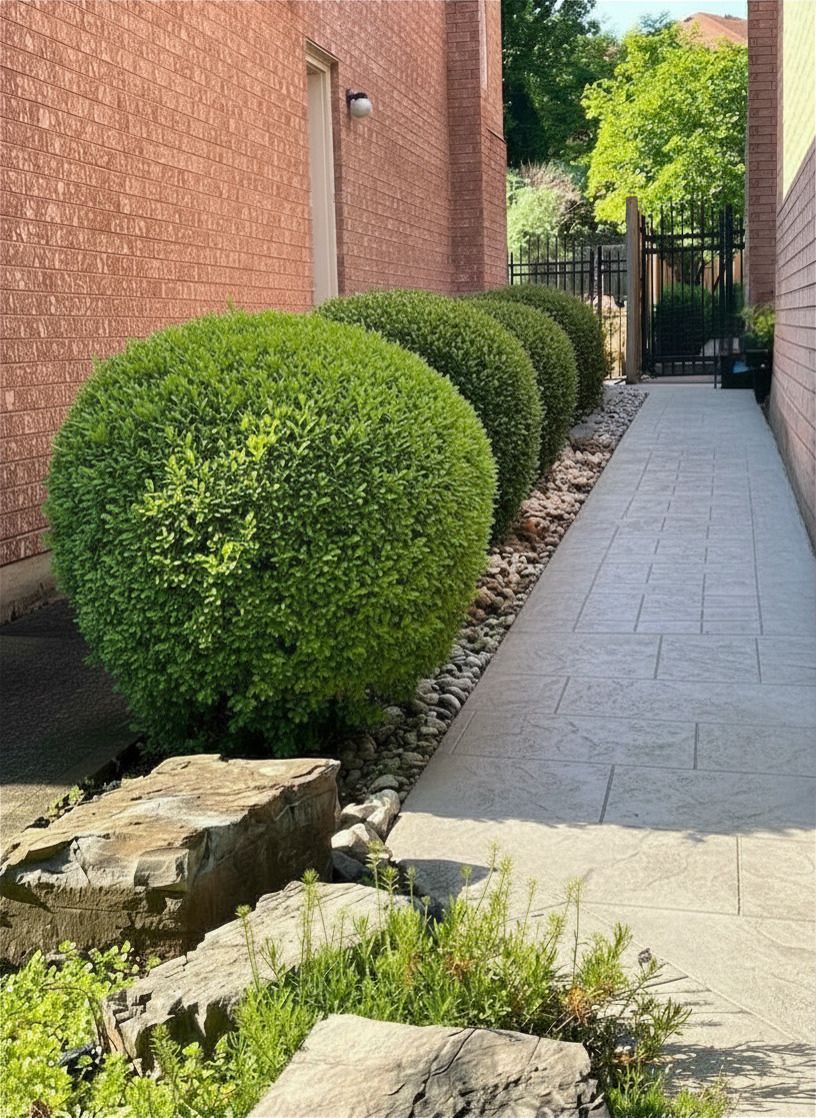
Common Mistake: Buying one of every plant that catches your eye at the garden centre. While each plant may be attractive individually, too many unrelated species often create visual clutter instead of cohesion.
How to Use This in Your Garden:
Instead of choosing many different plants, select a smaller palette and use each plant in larger groupings. Repeating three, five, or more of the same plant often creates a stronger impact than filling a garden with many individual varieties. Te result will usually feel calmer, more intentional, and easier to maintain.
What You’ll Start to Notice:
Look at professionally designed gardens and notice how often plants appear in groups rather than as isolated specimens. Large sweeps of the same shrub, perennial, or ornamental grass create the visual weight that makes a landscape feel intentional.
Layering: Creating Depth and Dimension
Layering is the technique of arranging plants in descending height tiers so each one has a role within the composition. Rather than placing plants wherever there is space, designers organize them from tallest to shortest to create depth, texture, and a natural transition through the garden.
A typical layered planting might include:
- Canopy trees forming the highest layer.
- Smaller ornamental trees or large shrubs beneath them.
- Evergreen and flowering shrubs providing the middle layer.
- Perennials and ornamental grasses adding seasonal colour and movement.
- Groundcovers softening the front edge of the planting bed.
This isn't simply about making sure every plant is visible. Layering creates a sense of depth that draws the eye through the landscape. It also helps gardens mature gracefully, since each layer has room to grow without overwhelming the plants around it.
Of course, there are exceptions. Island gardens, where the planting is viewed from all sides, are often designed with the tallest plants in the centre and lower plants around the outside. Likewise, gardens viewed primarily from one direction, such as a foundation planting or border along a fence, typically follow the classic back-to-front arrangement.
A well-layered garden feels balanced because your eye naturally moves from one layer to the next instead of stopping abruptly.
Common Mistake: Planting based on the size of the container at the garden centre instead of the plant's mature height. What looks balanced today can become overcrowded in just a few years as taller plants hide everything behind them.
How to Use This in Your Garden:
Stand where you'll most often view the garden, whether that's from the sidewalk, patio, or kitchen window. Can you clearly distinguish each layer of planting, or do plants blend into one another? If everything appears to be the same height, the garden may be missing the depth that layering creates.
Before planting, consider the mature height and placement of each plant. Arrange taller trees and shrubs toward the back, with progressively shorter plants moving toward the front, so each layer has room to be seen and appreciated.
What You’ll Start to Notice:
Look at established gardens and notice how your eye moves through different heights, from trees and large shrubs to perennials and groundcovers.
Repetition: Creating Unity Across the Landscape
While massing creates impact within a planting bed, repetition creates unity throughout the entire landscape.
Repetition is the intentional use of the same plants, colours, textures, or forms in different areas of a property. It gives the eye familiar elements to return to, making separate garden beds feel like they belong to the same overall design.
Imagine walking from your front yard to your backyard and noticing the same ornamental grass appearing near the front entrance, along a side path, and beside the patio. Or perhaps the same evergreen shrub is repeated in foundation beds and around an outdoor seating area.
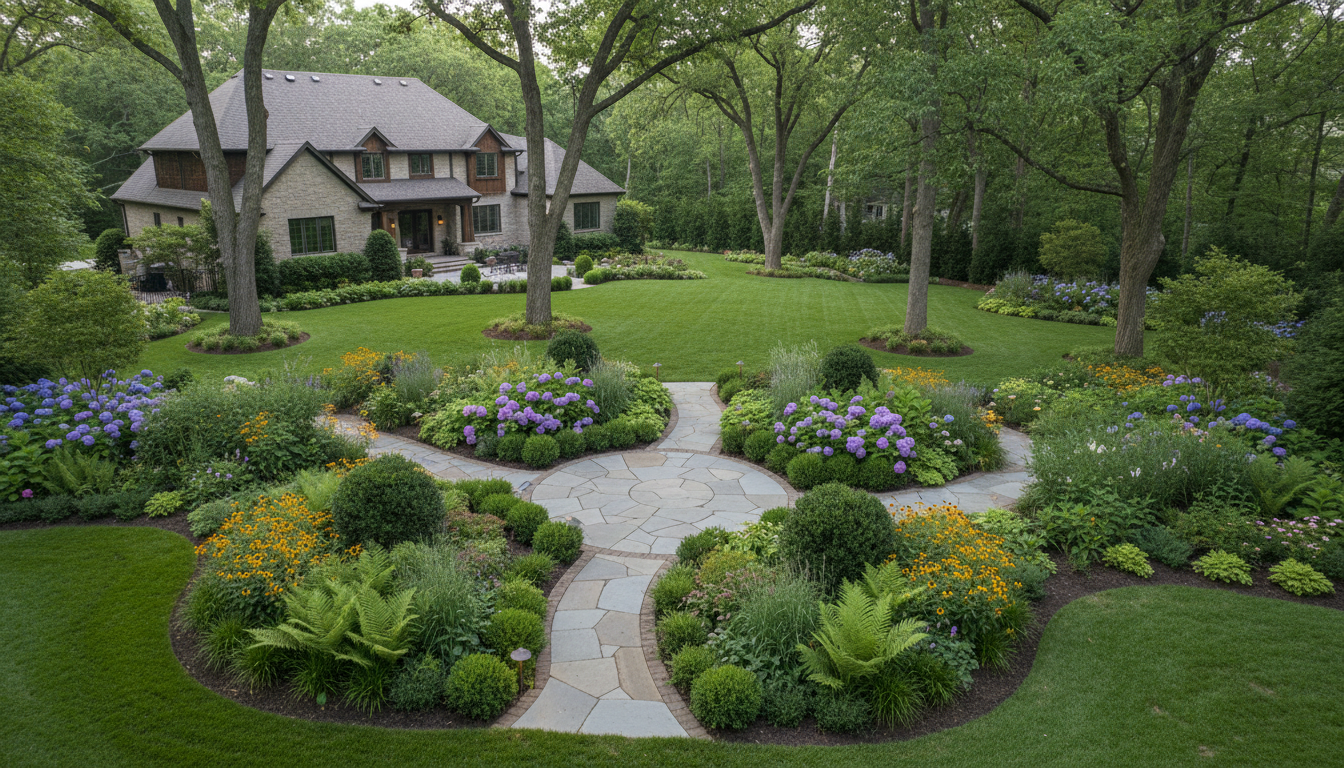
These repeated elements act like a common thread, connecting the landscape into a cohesive whole.
Repetition doesn't mean everything has to match. Instead, it provides consistency while allowing room for seasonal colour and unique specimen plants.
Without repetition, landscapes can feel like a series of unrelated gardens. With it, the property feels intentional from front to back.
Common Mistake: Treating every garden bed as a separate project. Choosing completely different plants for each area often creates a landscape that feels disconnected rather than cohesive.
How to Use This in Your Garden:
Walk from the front of your property to the backyard. Do you notice any plants, colours, or textures repeating along the way? If every area feels completely different, introducing a few repeated elements can help tie the entire landscape together.
Choose a few key plants, colours, or textures and repeat them throughout your property. This creates a connection between different garden areas and helps the landscape feel like one cohesive design.
What You’ll Start to Notice:
Pay attention to how often beautiful landscapes repeat the same elements. A plant that appears near the front entrance, along a pathway, and in the backyard creates a visual thread that quietly ties the property together.
How Designers Shape What You See
Once the planting itself has been thoughtfully arranged, designers begin thinking about how people will experience the landscape.
Where should your eye naturally travel? What deserves attention? What should fade into the background?
Professional landscape designers use several techniques to shape those experiences, creating gardens that feel inviting, balanced, and intentional.
Corner Planting: Softening the Architecture
One of the simplest but most effective ways to help a home feel established is through corner planting.
Many newer homes have strong architectural lines, sharp corners, and large expanses of siding or brick. Without landscaping, these hard edges can make the house feel disconnected from the property.
Corner planting helps bridge that transition.
By placing a carefully selected tree or large shrub near the corners of the house, designers soften the architecture and visually connect the home to the surrounding landscape. In landscape design, using plants to balance hard, linear architecture is often referred to as softscaping.
Corner trees also act as anchor plants. Because they are among the largest and most permanent elements in the landscape, they help ground the home and give it a sense of permanence.
The shape of the tree matters just as much as its location. Rounded or vase-shaped trees are often chosen because they soften the sharp angles of the roofline and walls. Narrow columnar trees, while useful in tight spaces, can sometimes reinforce those vertical lines instead of balancing them.
When thoughtfully placed, a corner tree doesn't simply fill an empty space, it helps the entire property feel more settled and connected.
Project Example: Our Milton front yard landscape design used strategically placed trees and layered planting to soften the builder-grade architecture and help the property feel more established.
A Common Mistake: Planting small ornamental trees too close to the corner simply because there is empty space. The tree's mature shape, scale, and relationship to the home should always guide its placement.
How to Use This in Your Garden:
When placing trees near your home, consider how their mature shape will interact with the architecture. Rounded or open-branched trees can soften corners and help the house feel more connected to the landscape.
What You’ll Start to Notice:
The next time you're walking through an established neighbourhood, notice how mature trees often seem to "hold" the corners of a home. Then compare that to a newly built subdivision where homes sit without mature planting. You'll quickly see how much difference strategic tree placement makes.
Framing: Guiding the Eye to a Feature
Framing is one of the most subtle techniques in landscape design, but it has a powerful effect on how a garden is experienced.
The purpose of framing is to draw attention to something worth seeing.
Just as a picture frame focuses your attention on a piece of artwork, plants can be positioned to create a natural frame around a front entrance, a specimen tree, a beautiful view, or even a favourite window seen from inside the house.
Unlike screening, framing leaves the centre of the view open. The plants work from the sides, directing your eye toward the focal point rather than blocking it.
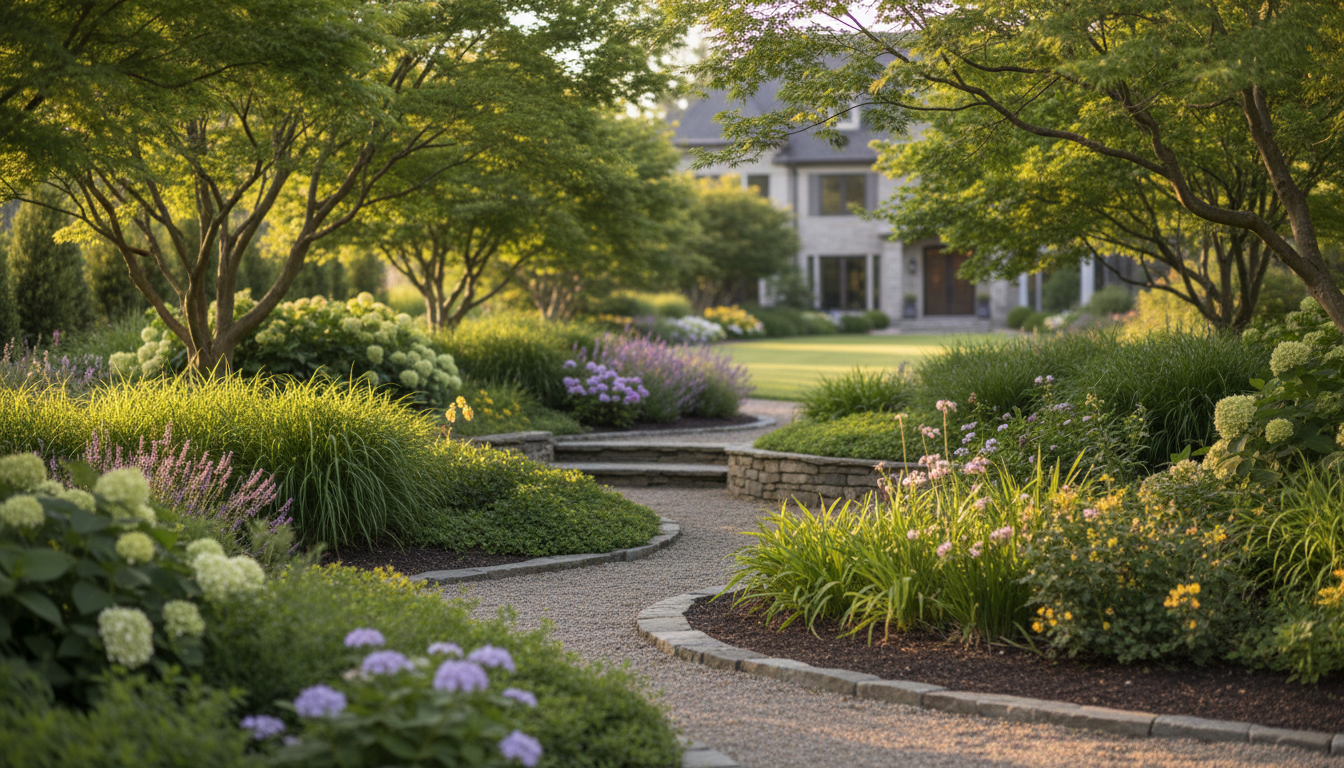
A well-framed view creates a sense of depth and encourages you to look beyond the immediate foreground, making the landscape feel larger and more engaging.
Common Mistake: Planting dense shrubs directly in front of the feature you want to highlight. Instead of drawing attention to it, they compete with or completely block the view.
How to Use This in Your Garden:
Stand at your front door and look outward, then stand at the curb and look back toward the house. Where does your eye naturally go? If there's no obvious destination, the landscape may be missing an opportunity to frame an important view.
Choose two plants with similar form to flank a front entrance, sculpture, or favourite garden feature. Think of them as the sides of a picture frame rather than a backdrop.
What You’ll Start to Notice:
When walking through gardens, notice where your eye is naturally directed. Some views feel more intentional because plants quietly guide your attention toward a focal point.
Deflected Vistas: Creating Mystery and Discovery
One of the more subtle techniques landscape designers use is called a deflected vista.
A deflected vista intentionally prevents you from seeing the entire landscape at once. Instead of revealing the final destination immediately, the design creates curiosity by partially concealing what is ahead.
As you move through the space, a pathway, planting area, tree, hedge, wall, or other feature blocks the view. When you change direction and move around the obstacle, the landscape is gradually revealed.
This creates a sense of discovery and encourages people to explore rather than simply look at the garden from one viewpoint.
A successful deflected vista typically includes three elements:
- An Obscured Focal Point
You may sense that something is ahead, a path leading around a corner, a glimpse of planting beyond, or a hint of an outdoor room, but the full destination is not immediately visible. - A Sense of Mystery
Humans are naturally drawn to discover what is hidden. By withholding the complete view, designers create a reason to move through the landscape. - The Reveal
As you follow the path and the view opens, the landscape transitions from a feeling of enclosure to a more expansive experience.
This technique is often used in larger gardens, but the principle can be applied even in smaller residential landscapes. A slight change in direction, a strategically placed tree, or a layered planting bed can create a moment of surprise and make a garden feel larger than it actually is.
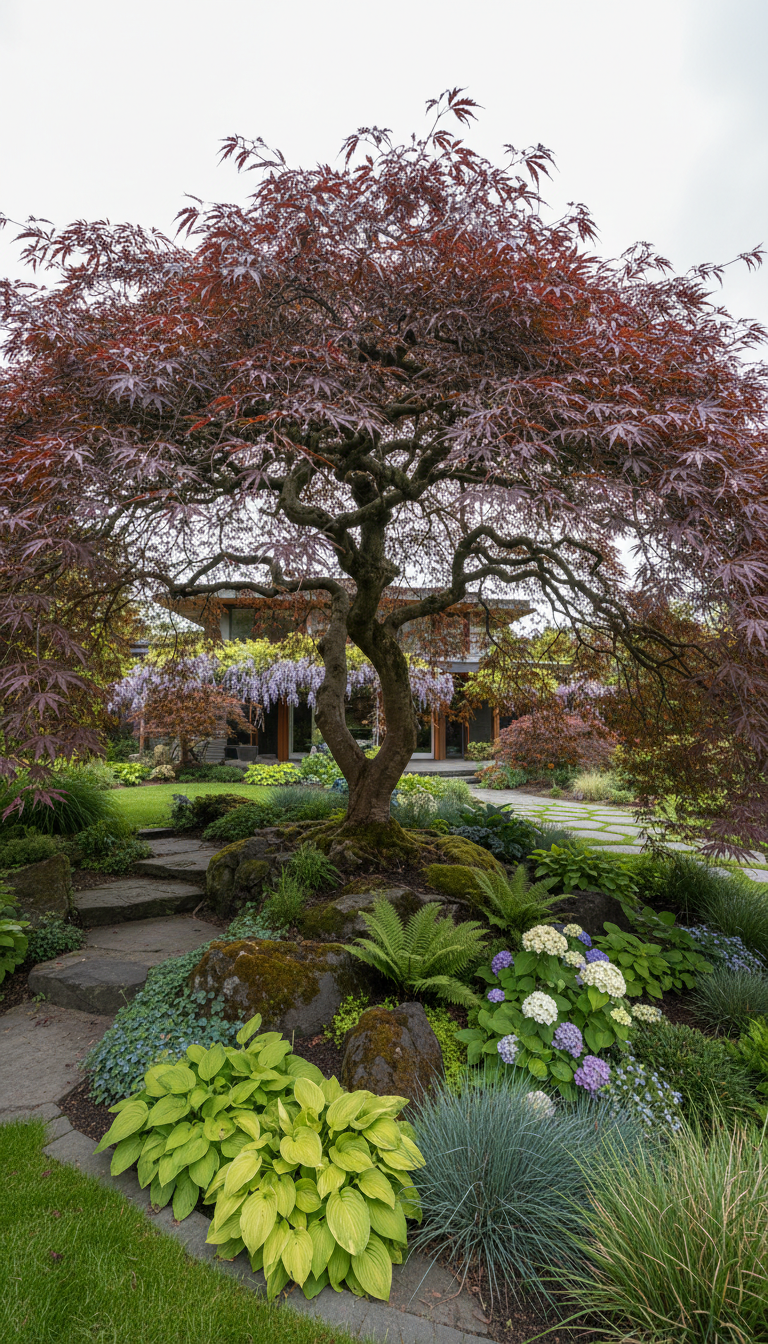
A Common Mistake: Revealing everything from the first viewpoint. When the entire garden is visible immediately, there is less opportunity for discovery and movement through the space.
How to Use This in Your Garden:
If you have a walkway or path in your garden, consider whether the destination should be visible immediately. Sometimes creating a partial view and allowing the landscape to unfold as you move creates a much more memorable experience.
What You’ll Start to Notice:
The next time you visit a botanical garden or thoughtfully designed public space, notice whether you can see everything at once. Some of the most memorable gardens create moments where you discover something only after moving through the space.
Screening: Improving the View
While framing draws attention toward something beautiful, screening is used to draw attention away from something you would rather not see.
Screening is the technique of using plants to block or soften undesirable views, such as a neighbour's driveway, an air conditioning unit, utility equipment, or a busy road.
The goal isn't necessarily to create a solid green wall. In many cases, layered planting creates a much more attractive and natural solution.
A combination of evergreen trees, shrubs, ornamental grasses, and flowering plants can provide privacy while still adding seasonal interest and depth.
Good screening solves a problem without creating a new one.
Rather than making the landscape feel enclosed, it should improve the overall experience of the garden and direct attention back toward the spaces you want to enjoy.
Project Example: In our Milton front yard project, layered planting in the island garden helped screen neighbouring views while creating a welcoming entrance to the home.
Common Mistake: Planting a single row of evergreen trees too close together. While they may provide quick screening, they create a wall of greenery that lacks interest or dimension.
How to Use This in Your Garden:
Stand where you spend the most time outdoors. Instead of asking, "Where do I need more privacy?" ask, "What do I notice first?" The answer often reveals exactly where screening will have the greatest impact.
Sometimes screening only a portion of a view creates a more open and inviting landscape than blocking everything completely. A layered combination of trees, shrubs, and perennials often creates a more natural and attractive solution than a single row of plants.
What You’ll Start to Notice:
Look at how successful privacy planting works. The best examples rarely look like a wall of plants, they blend into the landscape while quietly blocking unwanted views.
Focal Points: Giving the Eye a Place to Rest
Every successful landscape has a sense of hierarchy.
Without a focal point, the eye wanders from one feature to another without ever settling. The result can feel busy, even when every individual plant is beautiful.
A focal point provides a destination.
It might be a specimen Japanese maple, a beautifully crafted front entrance, a water feature, a seating area, or even a borrowed view beyond the property.
The important thing is that the landscape supports the focal point rather than competing with it.
Supporting plants are often quieter in colour and texture, allowing the focal point to stand out naturally.
A landscape doesn't need multiple stars. More often, one or two well-chosen focal points create a stronger and more memorable design than trying to make every plant the centre of attention.
Common Mistake: Filling a garden with too many specimen plants. When everything is intended to stand out, nothing truly does.
How to Use This in Your Garden:
Imagine viewing your garden as a photograph. Where would your eye naturally land first? If your attention jumps from one plant to another without settling, simplifying the design may create a stronger focal point.
What You’ll Start to Notice:
As you visit beautiful gardens, notice where your eye lands first. Strong designs usually have a clear focal point that creates a sense of purpose and direction.
How Designers Create Landscapes That Improve With Age
One of the biggest differences between a professionally designed landscape and a garden assembled over time is that designers plan for the future.
Plants grow. Trees mature. Gardens change with the seasons. A landscape that looks balanced on planting day should continue to improve over the years, not become overcrowded, difficult to maintain, or out of proportion with the home.
The following techniques help ensure a landscape matures gracefully.
Scale and Proportion: Designing for the Garden, Not the Plant Pot
Scale and proportion describe the relationship between the size of landscape elements and the space around them. Designers consider how plants relate not only to each other, but also to the home, garden beds, walkways, patios, and the overall property.
A plant can be healthy, beautiful, and perfectly suited to your climate but still be the wrong choice if it's out of scale.
For example, a tiny ornamental shrub may disappear against the façade of a large two-storey home, while an oversized shade tree can overwhelm a compact front yard. Likewise, a narrow foundation bed may not have enough depth to properly support large shrubs as they mature.
Professional designers think beyond the size of a plant at the garden centre. They ask what it will look like in five, ten, or twenty years.
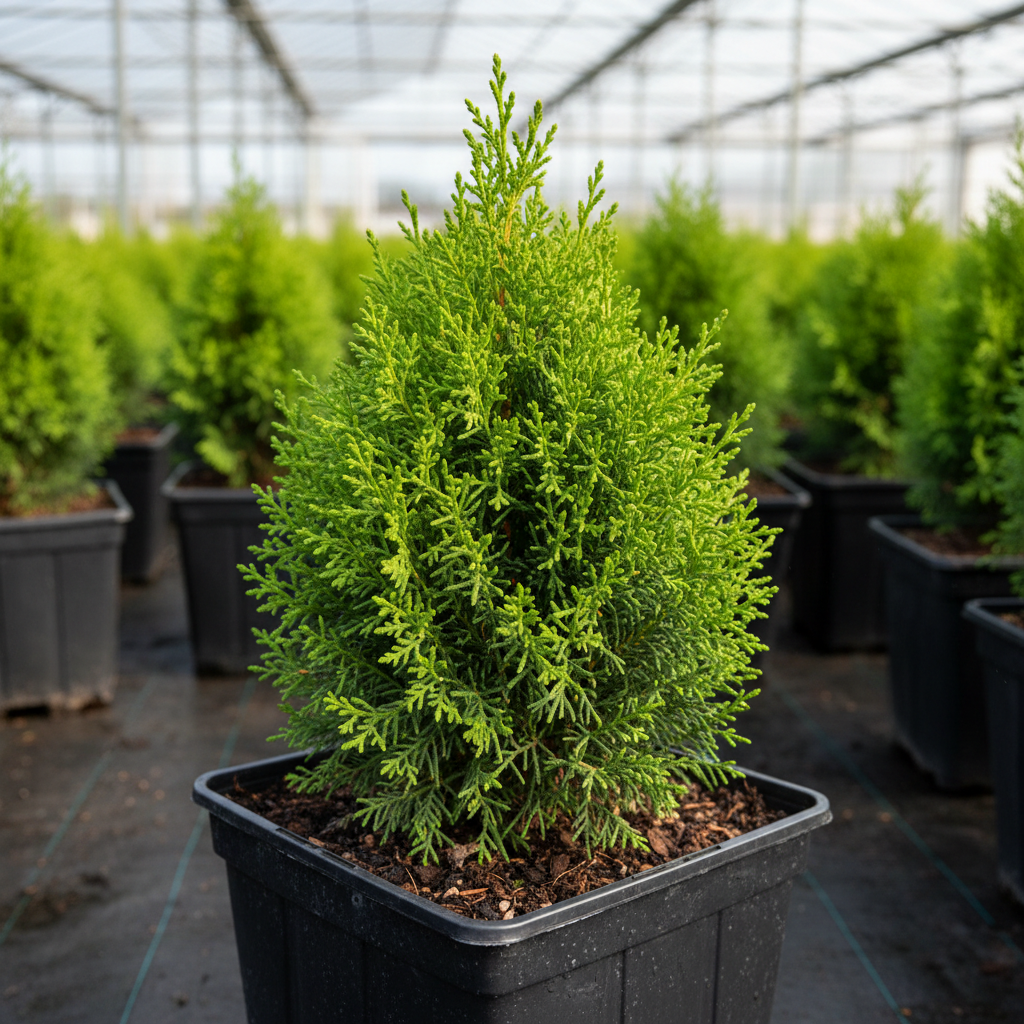
Designing with mature size in mind creates landscapes that feel balanced long after the installation is complete.
Common Mistake: Choosing plants because they look "just the right size" in the nursery. It's their mature height and width (not their container size) that determine whether they'll fit the space.
How to Use This in Your Garden:
Before purchasing a plant, look up its mature height and spread. If the label says it grows two metres wide, make sure your design allows two metres, not the thirty centimetres it occupies today.
What You’ll Start to Notice:
Walk through an older neighbourhood and notice how mature trees and shrubs relate to the homes around them. The best landscapes feel proportional, as though the house and garden have always belonged together.
Evergreen Structure: The Backbone of the Landscape
While flowers often receive the most attention, professional designers know that structure is what holds a landscape together.
Evergreen trees and shrubs are often referred to as the backbone of the landscape because they provide year-round form, colour, and definition. They create a framework that remains even after deciduous trees lose their leaves and perennials have died back for the winter.
That doesn't mean every garden should be filled with evergreens. Instead, designers use them strategically to anchor key areas, provide winter interest, define outdoor spaces, and create a sense of continuity throughout the year.
Once the evergreen structure is in place, seasonal plants can add colour and texture without carrying the entire design on their own.
Common Mistake: Focusing only on flowers. A garden that looks spectacular in July may feel empty from November through April if it lacks evergreen structure.
How to Use This in Your Garden:
When planning a new garden bed, choose your structural evergreens first. Think of them as the framework of the design, then layer flowering shrubs and perennials around them.
What You’ll Start to Notice:
Visit a public garden in January or February when flowers and leaves are gone. Notice how evergreen shrubs, conifers, dried ornamental grasses and interesting branch structure continue to give the landscape shape and character.
Seasonal Succession: Designing for All Four Seasons
Professional landscape designers don't design for a single moment, they design for the entire year.
This concept is known as seasonal succession: selecting plants so that different parts of the garden come into their own as the seasons change.
A thoughtfully designed landscape changes throughout the year, with spring flowers, summer colour, fall foliage, and winter structure each playing a role.
Native plants can also play an important role in creating seasonal interest while supporting local ecosystems. Learn more in our guide to Native Plants for Ontario Gardens
The goal isn't to have every plant performing at the same time. Instead, each season contributes something unique, ensuring the landscape always has interest and purpose.
Designing this way also helps avoid long periods where large areas of the garden feel empty or uninspiring.
Common Mistake: Choosing every plant for its spring flowers or summer blooms. Once those flowers fade, the garden can lose much of its appeal.
How to Use This in Your Garden:
Take photos of your garden in each season. Looking back at them often reveals times of year where the landscape feels sparse, helping you identify opportunities to add year-round interest.
As you're selecting new plants, ask yourself what each one contributes beyond its bloom period. Interesting foliage, bark, berries, seed heads, or fall colour can all extend a plant's value throughout the year.
What You’ll Start to Notice:
Instead of judging a garden only in summer, observe it throughout the year. Well-designed landscapes always have something changing, emerging, or providing structure as the seasons progress.
Bringing It All Together
Professional landscape design isn't about following a checklist or memorizing a handful of rules. It's about understanding how different design techniques work together to create a landscape that feels natural, balanced, and welcoming.
Massing creates impact. Layering adds depth. Repetition brings unity. Corner planting softens architecture. Framing and screening shape what you see, while focal points guide your attention. Scale, structure, and seasonal succession ensure the landscape continues to improve over time.
Individually, each technique has value. Together, they create gardens that feel effortless; not because they happened by chance, but because every decision supports the next.
The next time you walk through a neighbourhood or visit a beautiful garden, take a closer look. You may start noticing these techniques everywhere.
And once you see them, you'll never look at a landscape the same way again.
Ready to Transform Your Outdoor Space?
Whether you're planning a complete landscape transformation or looking to make better use of your property, thoughtful landscape design can turn overlooked spaces into beautiful, functional gardens you'll enjoy for years to come. We'd be happy to discuss your ideas and explore what's possible.
Frequently Asked Questions About Landscape Design
1. How do landscape designers make a garden look cohesive?
Professional designers create cohesion by using techniques like repetition, massing, layering, and a consistent plant palette. Rather than choosing many unrelated plants, they create connections between different areas of the landscape so the garden feels intentional and balanced.
2. Why do some gardens look more professionally designed than others?
Beautiful landscapes are usually the result of thoughtful planning rather than simply having expensive plants. Designers consider plant placement, scale, repetition, focal points, views, and how the garden will change over time.
3. How many different plants should I use in my garden?
Using fewer plant varieties in larger groupings often creates a stronger design than using many different plants individually. Professional designers often repeat key plants throughout the landscape to create rhythm and unity.
4. How do I group plants in my garden?
Massing is the practice of grouping multiple plants of the same species or variety together to create visual weight, structure, and impact. It helps planting beds feel intentional rather than scattered.
5. Why do landscape designers repeat the same plants?
Repetition creates connection throughout a property. Using the same plants, colours, or textures in different areas helps separate garden spaces feel like part of one overall design.
6. How do I make my new home feel more established?
Strategic tree placement, layered planting, and appropriately scaled plants can help newer homes feel more connected to the landscape. Trees placed near corners of the home, for example, can soften architecture and create a more settled appearance.
7. How do landscape designers create privacy without making a yard feel closed in?
Good screening combines plants of different heights, textures, and growth habits to block unwanted views while still creating a natural-looking landscape. A layered planting design often feels more inviting than a solid wall of shrubs.
8. How can I make my garden look good in every season?
The best landscapes include a combination of evergreen structure, flowering plants, interesting foliage, fall colour, and winter features. Designing for multiple seasons ensures your garden continues to provide interest throughout the year.
Interested in Learning More About Landscape Design?
Thoughtful landscape design involves more than choosing plants. Explore these articles to learn more about the ideas, planning, and design decisions that help create beautiful outdoor spaces.
- How Much Does Landscaping Cost in the GTA: A Realistic Pricing Guide for GTA Homeowners – Understand typical landscaping costs for patios, walkways, planting, decks, fences, and outdoor living spaces so you can plan your project budget with confidence.
- Native Plants for Ontario Gardens: How to Add More Without Going Fully Wild Discover how to incorporate more native plants into your garden while still creating a beautiful and intentional landscape.
- How Planting Design Can Transform Your Front Yard
Learn how thoughtful planting design can improve curb appeal, create structure, and help your home feel connected to the landscape.